
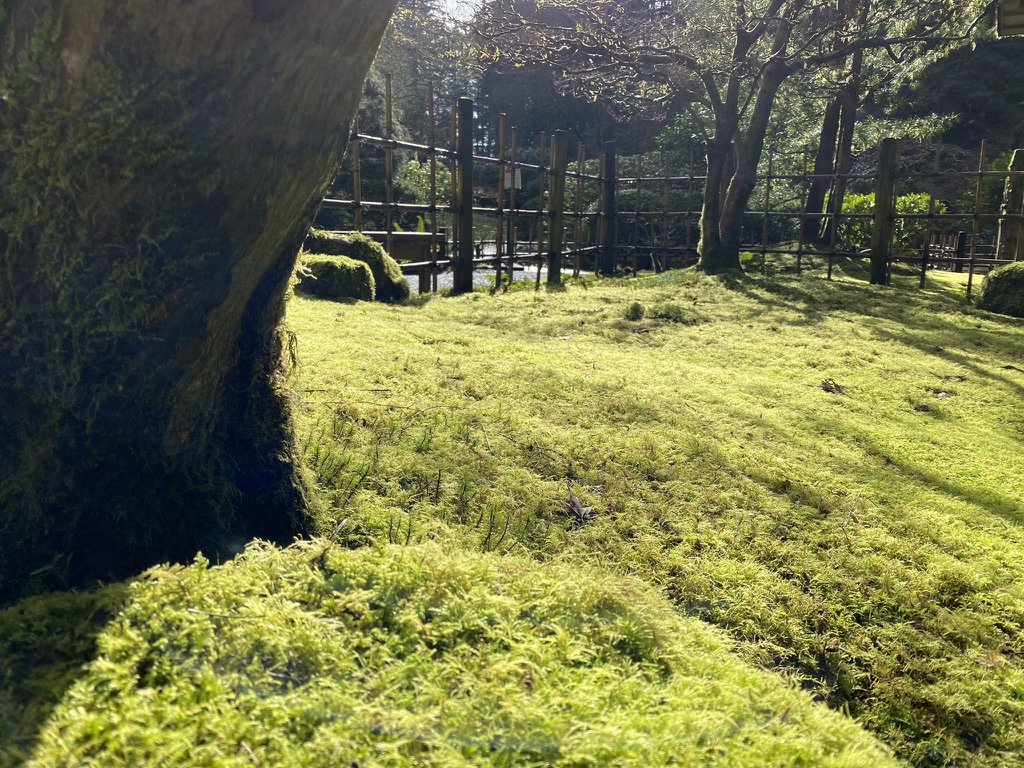
We are on the flip side of winter solstice and January definitely feels as wintery as winter gets. This year in Portland, Oregon it feels like its been raining non stop. The ground is soggy and the moss is plump and bright.
It use to be common to hear that winter is the best time to prune trees but now we know more often than not, that statement is more for the humans than for the trees. If you were a farmer and owned an orchard, this might be the least busy time of year and you could manage to squeeze in some fruit tree pruning. If done right, it worked just fine for fruit production and some of those cuttings could be used for fodder or building materials.
For centuries, in North America, fruit tree pruning practices were applied to any tree in our landscapes even if was not a fruit tree. Finally in the late 70’s and 80’ with modern arboriculture led by by Dr. Shigo, we learned all kinds of things about how and why trees fail as well as how they respond to pruning. We are still learning today as more and more people understand the value of researching urban forestry, not just commercial forestry.
This research has benefited our small garden trees as well. We know that pruning timing is more related to the species and the specific type of cut being made. Each species has an optimal time for taking care of wounds as well as different growth response depending on the type of cut made.
In my upcoming course Pruning Decisions with a Plan, I highlight a chart from Edward F. Gilman’s book An Illustrated Guide to Pruning 3rd Edition. It is located in Table 5-1 and called Comparison of Tree Responses to Various Pruning Cuts. I feel like every pruning book should have a chart like this. It reminds us to look to the future and confirm that our pruning choices will give us the reaction we are aiming for.
Thanks for subscribing to this newsletter. I hope your 2025 will be full of wonder, curiosity and fun in the trees!
Happy New Year!
Maryann
p.s. As a member of this newsletter you will be the first to know when the course “Pruning Decisions with a Plan” will be available to purchase.
Book Recommendations
-An Illustrated Guide to Pruning 3rd Edition, By Edward F. Gilman
Gilman even has some wonderful free videos online through The University of Florida. This is one of my go-to book reference books.
-The Woodland Homestead, How to make your land more productive and live more self-sufficiently in the woods, by Brett McLeod
This book opened my eyes to some of the traditional woodland management techniques I now see used in our gardens for aesthetic reasons such as coppicing and pollarding.
Going ons
Zoom class
On February 6, 2025 I will be teaching a class for the Gresham Japanese Garden about the Fundamentals of Pruning Conifers. It is on Zoom followed by an in person session in the Gresham Japanese Garden. We love our conifers here in the Northwest! Register with the Gresham Japanese Garden.
Conference
Save the date for the North America Japanese Garden Association 7th International Japanese Garden conference October 15-18, 2025 in St. Louis, MO. It will be hosted by the Missouri Botanic Garden. I have been to each conference since the first at the Denver Botanic garden in 2012. Each one has been full of unique presentations, beautiful gardens, and amazing people who are generous with their knowledge and enthusiasm.
FYI, Your privacy is important to me. Your email address is kept secure through my mailing list software provided by Kajabi. Your information will never be sold to anyone and you can unsubscribe from this newsletter anytime simply by clicking UNSUBSCRIBE at the bottom of this email.


Responses